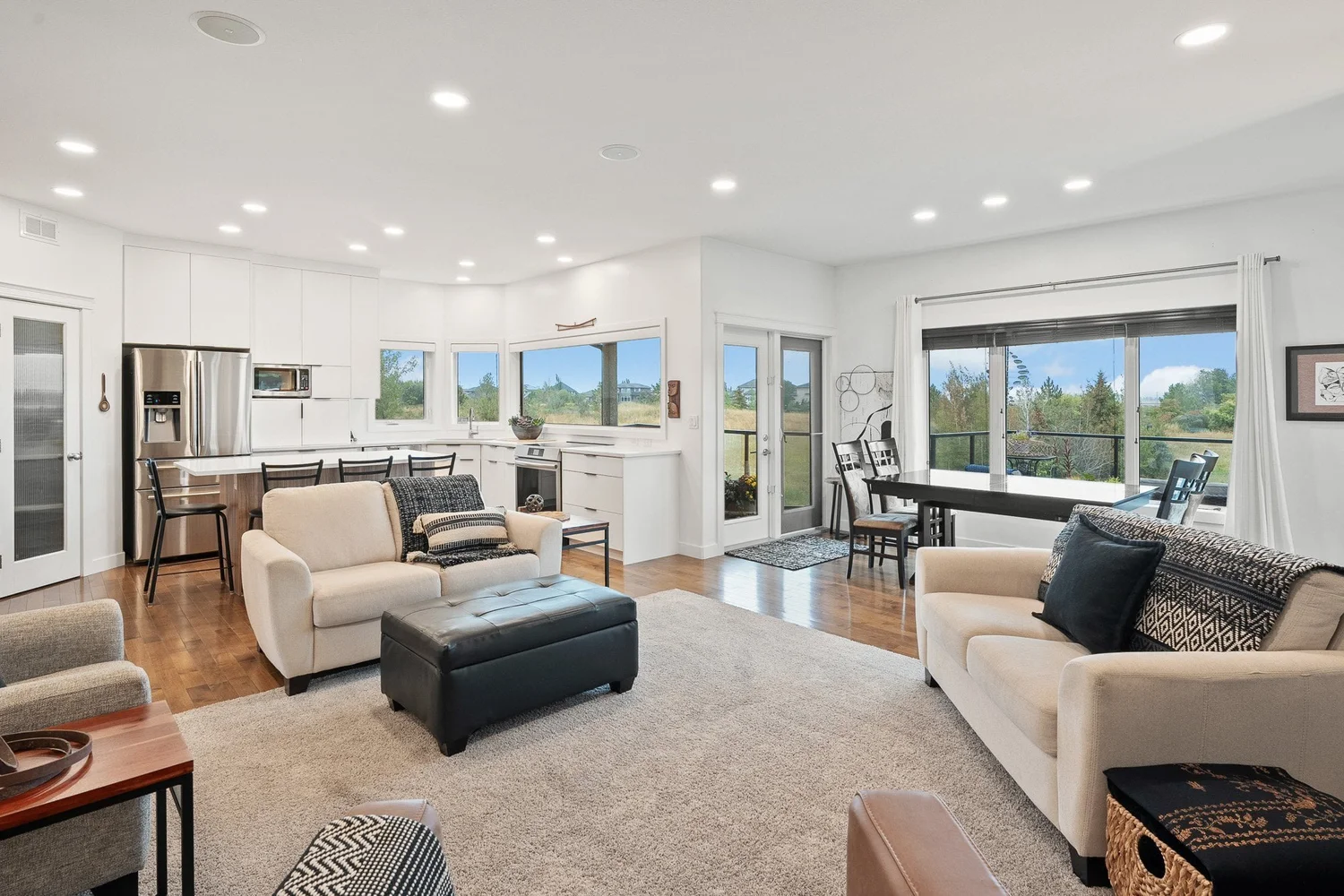
Selling a home while your family is still living in it requires a different approach to preparation.
You are not emptying the house, hiding every sign of daily life or creating a show home overnight. The goal is more practical: remove the distractions that show most clearly in photographs, keep pathways and rooms understandable, protect privacy, and make the appointment workable for everyone.
That is especially important when the home includes children, pets, a finished basement full of storage and a kitchen that is still being used. If your listing needs to go live on a short window in Saskatoon or Central Saskatchewan, there may not be time for a perfect reset. Triage matters more than perfection.
This guide sits alongside our broader home-selling checklist, but focuses specifically on occupied homes and the decisions families often find most difficult.
What actually shows in a photograph?
Before making a long list of tasks, concentrate on the three things that affect the image most.
1. Clutter that changes the shape of the room
Photographs show whether a room feels open, blocked or difficult to move through. Large piles, floor-level items, overfilled furniture and crowded corners can make a room harder to understand.
Clear the main walking routes first. Move laundry baskets, toy bins, shoes, sports equipment and loose cords. You do not need to remove every chair or book, but furniture should not appear to be competing for space.
2. Busy horizontal surfaces
Kitchen islands, bathroom vanities, nightstands, dining tables and desks collect everyday life quickly. In a photograph, those surfaces can become the visual subject instead of the room.
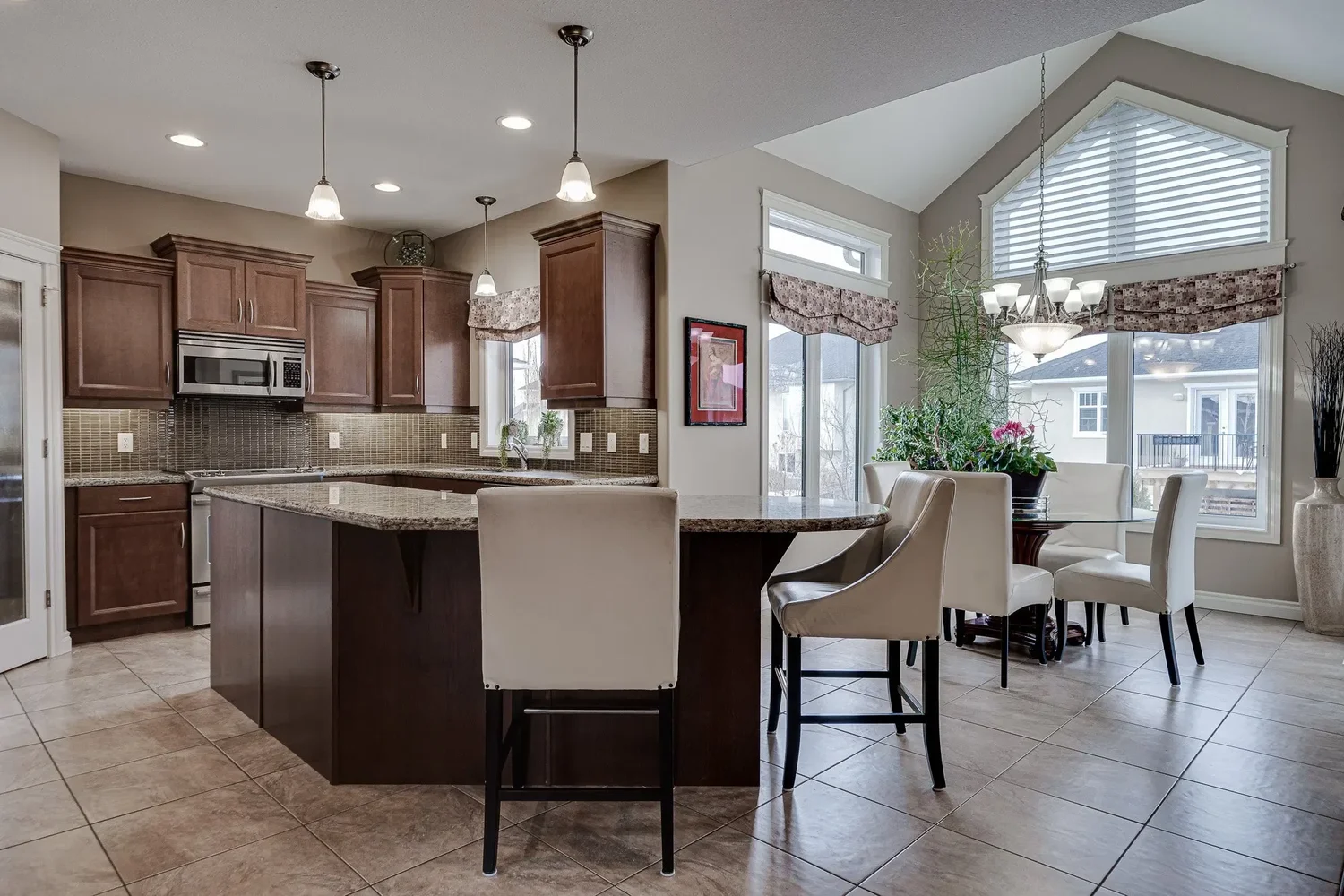
Keep a few useful or intentional items if they make the space feel natural. Remove dishes, paperwork, medication, chargers, school materials, toiletries and cleaning products. The kitchen can still look like a working kitchen; it simply needs enough clear surface for buyers to understand its size and condition.
3. Reflective and light-catching details
Glass, mirrors, stainless steel, glossy counters and windows show marks, streaks and unwanted reflections. Bedding also draws attention because it occupies a large, central area in a bedroom.
Prioritize the surfaces the camera is likely to face directly. Clean the main mirrors, shower glass, accessible windows and appliance fronts. Make the beds neatly and smooth the visible bedding. You do not need to iron every sheet or remove every cushion.
What does not deserve the same effort?
An occupied home will always have items stored somewhere. Do not spend the final hour reorganizing closed drawers, sealed storage bins or the back of a closet if visible areas still need attention.
The following usually matters less than clear routes, simple surfaces and clean reflective areas:
- Making every shelf completely empty
- Sorting every toy into a permanent system
- Reorganizing hidden cupboards
- Removing all décor and family life
- Cleaning parts of the home that will not be photographed
- Packing an entire room when moving a few large items would solve the visual problem
Privacy is the exception. Put away mail, school information, medication, financial documents, identifying labels and valuables whether or not they are visually distracting.
The last day: create a temporary system
The day before the appointment should be about making the morning simple, not trying to complete every possible task.
Give each person one place for daily items
Use labelled totes, laundry baskets or another temporary container for toys, shoes, schoolwork, sports equipment and personal items. The important part is deciding where those containers will go before the photographer arrives.
Avoid moving everything into a finished basement, storage room or hallway that buyers need to understand. If the basement is being photographed, choose a designated holding area that will not block access or make another room look unusable.
Make the pet plan early
Decide where the pets will be during the appointment. The best option may be a walk, a trusted friend, daycare or a short trip in the vehicle, depending on the animal and the weather.
If a pet must remain at home, use a secure room that the Realtor has confirmed will not be photographed. Tell the photographer exactly where the pet is. Do not assume a closed door is enough for an anxious or determined animal.
Remove pet bowls, beds, crates, litter boxes, scratching posts, toys and food containers from photographed rooms. Keep essential food, water, medication and leash supplies accessible in the temporary pet area. A pet plan should protect the animal first; the photograph is secondary.
Reset the kitchen without stopping family life
Do not try to make the kitchen unusable for an entire day. Instead, choose a stopping point the night before:
- Wash or put away the visible dishes
- Clear most of the island and counters
- Store drying racks, sponges and cleaning products
- Wipe the sink and appliance fronts
- Remove notes and personal papers from the refrigerator
- Leave only a small number of practical or decorative items
Plan a simple breakfast for the morning so the final reset does not immediately disappear.
Deal with the basement honestly
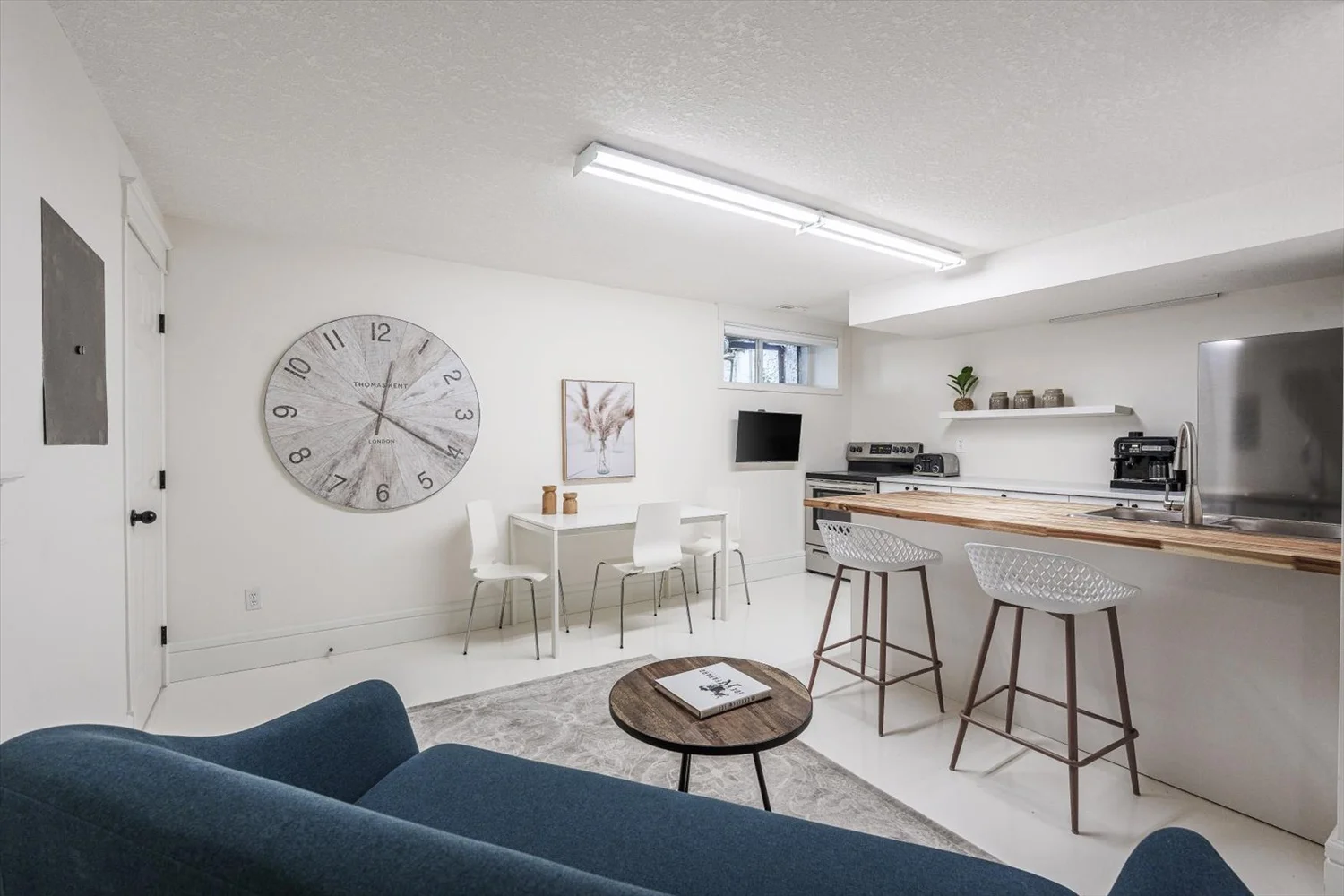
A finished basement should be prepared according to its role. If it functions as a family room, office, guest room or playroom, make that use readable without trying to erase it.
Reduce what blocks the floor and keep the path through the room clear. If one area has several purposes, choose the most important one for the photograph. A room can look lived in and still communicate its size and function.
For a genuinely full storage room, consider three options with the Realtor:
- Triage the room: Consolidate boxes, clear the entrance and show the available storage.
- Photograph only the useful portions: If the room contains a mechanical feature, window or storage system that matters, make that area accessible.
- Do not include the room in the media plan: This may be reasonable for a minor storage room, but not as a way to hide a material feature or condition buyers should understand.
Keep furnace equipment, electrical panels, sump pumps, windows and other important components accessible. Do not cover damage, dampness or permanent conditions simply to improve an image. Discuss those issues with the Realtor.
The morning of the shoot: work around real schedules
School runs, work start times and childcare can make the morning more complicated than the preparation itself.
If the appointment is early, complete as much as possible the night before. The morning should be limited to the final reset:
- Make beds and straighten visible bedding
- Put away breakfast dishes and toiletries
- Clear the last personal items from counters and tables
- Move vehicles, bins, boots and outdoor equipment
- Secure pets and confirm the agreed holding area
- Open blinds or curtains where appropriate
- Turn on working lights if requested or helpful
- Make sure the approved rooms, gates and outbuildings are accessible
If children must remain home, choose one safe room that is not being photographed. Keep snacks, activities and any required medication there. Everyone should stay clear of active shooting areas and reflective surfaces while the photographer works.
For Saskatoon and Central Saskatchewan listings, winter preparation adds another practical step. Clear snow and ice from the driveway, walk, steps and any exterior features included in the appointment. Put away wet boots, shovels, salt bags and dripping outerwear where possible. A short daylight window or changing weather can make access and readiness more important than small decorative details.
If the home will not be ready, tell the Realtor before the appointment rather than hoping the issue will disappear when the photographer arrives.
The message Realtors can send sellers
A long checklist can overwhelm an already busy household. Start with three priorities, then provide the detailed guide only if the seller needs it.
You can send this message:
Please focus on three things before the photography appointment: clear the main surfaces and walking paths, make the beds and tidy the bathrooms, and arrange for children, pets and vehicles to be out of the photographed areas. You do not need to empty the home. If any room is especially full or access may be difficult, please tell me today so we can decide what should be photographed and plan the appointment properly.
This gives the seller a manageable first step while opening the door to important conversations about pets, storage rooms, access and readiness.
A realistic standard for an occupied home
The strongest preparation is not the one that makes a family home look vacant. It is the one that lets a buyer understand the rooms, see the available space and notice the property’s useful features without being distracted by temporary household activity.
Start with what the camera sees most: pathways, surfaces and reflective areas. Then deal with pets, children and basement access. Leave low-impact tasks until the end, or leave them undone if they will not affect the agreed coverage.
For professional interior and exterior coverage, review the real estate photography service. To compare current options and confirm what is included in a selected order, visit the pricing page. When the home and seller are ready, use the booking path to arrange the appointment.