
Help empty rooms feel easier to imagine.
Realistic furniture and décor can give buyers a clearer sense of scale, purpose and possibility—while keeping the photographed property honest.
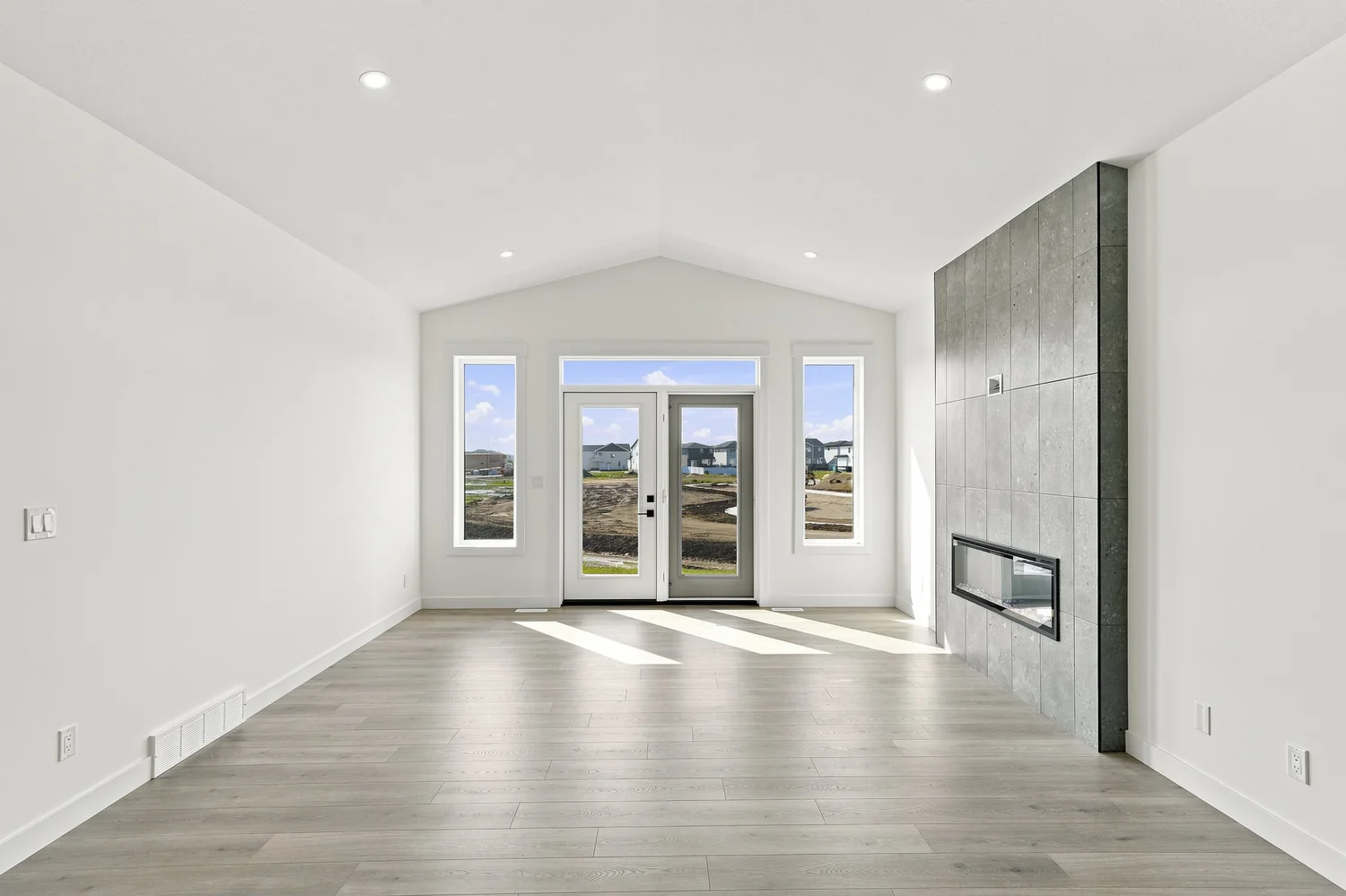

The original vacant-room photograph remains available for comparison and responsible disclosure.
Empty rooms leave important questions unanswered.
Virtual staging should make the space easier to understand—not turn it into a different property.
Without familiar objects, buyers can struggle to judge what fits, where circulation paths sit or how an open area might be divided.
- Give an empty room a believable purpose.
- Help define living, dining and work zones.
- Make scale easier to understand before a showing.
- Present a more complete listing without staging every room.
For the Realtor, the goal is simple: give buyers useful context, help the seller feel well represented and protect the professional standard of the listing.
Useful context, thoughtfully added.
The strongest results support the architecture, perspective and available light instead of competing with them.
Make the room legible.
Show a practical furniture arrangement and help buyers recognize how a vacant or flexible room could function.
Add a sense of scale.
Use appropriately sized furnishings to give buyers a visual reference without making the room appear larger.
Create a consistent set.
Coordinate selected rooms around one restrained visual direction that suits the property.
Furniture may change. The room should not.
Virtual staging is a marketing treatment, not permission to hide a material condition or redesign the property.
- Do not conceal damage, stains, cracks or defects.
- Do not change walls, windows, doors or ceiling heights.
- Do not replace fixed finishes without clear authorization and disclosure.
- Do not add views, light sources or exterior features that do not exist.
- Do not distort proportions or make a room appear larger.
Practical questions and next steps
Reviewed October 7, 2026. Confirm your order’s services, timing and usage terms before booking or publishing.
Should a virtually staged image be labelled?
Label an image clearly when virtual staging could otherwise be mistaken for what is physically present. A plain “Virtually staged” description helps viewers interpret it; placement and format must also meet the receiving platform’s current rules. Keep the original for comparison and check that captions remain visible when the image is downloaded or reposted.
Should the original vacant photograph appear alongside virtual staging?
Showing the original vacant room alongside the staged version gives buyers useful context and helps avoid confusion at a showing. Keep both files and identify the concept clearly. This is a practical transparency recommendation; specific upload and disclosure requirements come from the brokerage and receiving platform. Confirm those requirements before choosing the final image sequence.
Can furniture be digitally removed from an occupied property?
Digital furniture removal may be feasible, but it can obscure what was actually visible beneath or behind an object. Keep the original and do not use reconstruction to imply that hidden damage is absent. Cleaning and decluttering before capture is preferable. Send the specific image and intended treatment for assessment, with disclosure appropriate to the published result.
Can AI remove damage or change permanent property features?
Do not use AI editing to conceal damage or falsely change walls, windows, finishes, room size or other permanent features. A marketing image should not imply that a repair or renovation has occurred when it has not. Keep original references, review the edited result carefully and ask the Realtor how any conceptual treatment must be identified before publication.
How many rooms should be virtually staged?
Stage the rooms whose purpose or scale is difficult to read, often a main living area, dining zone or flexible bedroom. Do not stage every room by default or repeat nearly identical viewpoints. Choose the source images first and explain the buyer question each treatment should answer. Confirm the number of images and scope before ordering.
How do I avoid unrealistic furniture scale in virtual staging?
Use the room dimensions, doors, windows and circulation routes as checks on furniture scale. A sofa should not block a passage or imply that a room holds more than it reasonably can. Review the staged image against the original and plan, and request a correction if proportions or fixed features have changed.
Is a 3D floor-plan render a photograph of the actual furnished home?
No. A furnished 3D floor-plan render is a model that illustrates layout and a possible furnishing arrangement. It is not evidence that those furnishings or finishes are in the home. Identify it as a render, verify the layout against the delivered plan and keep actual photographs available so viewers can distinguish concepts from present condition.
Can staged photos be used on MLS or REALTOR.ca?
Acceptance depends on the current listing platform and brokerage rules, including disclosure and any original-image requirements. Do not assume that a staged image accepted on one channel can be used everywhere. Ask the brokerage to check the destination’s requirements before upload, then retain the original and use clear labelling in the approved format.
Book the media for your listing · Explore customer resources